

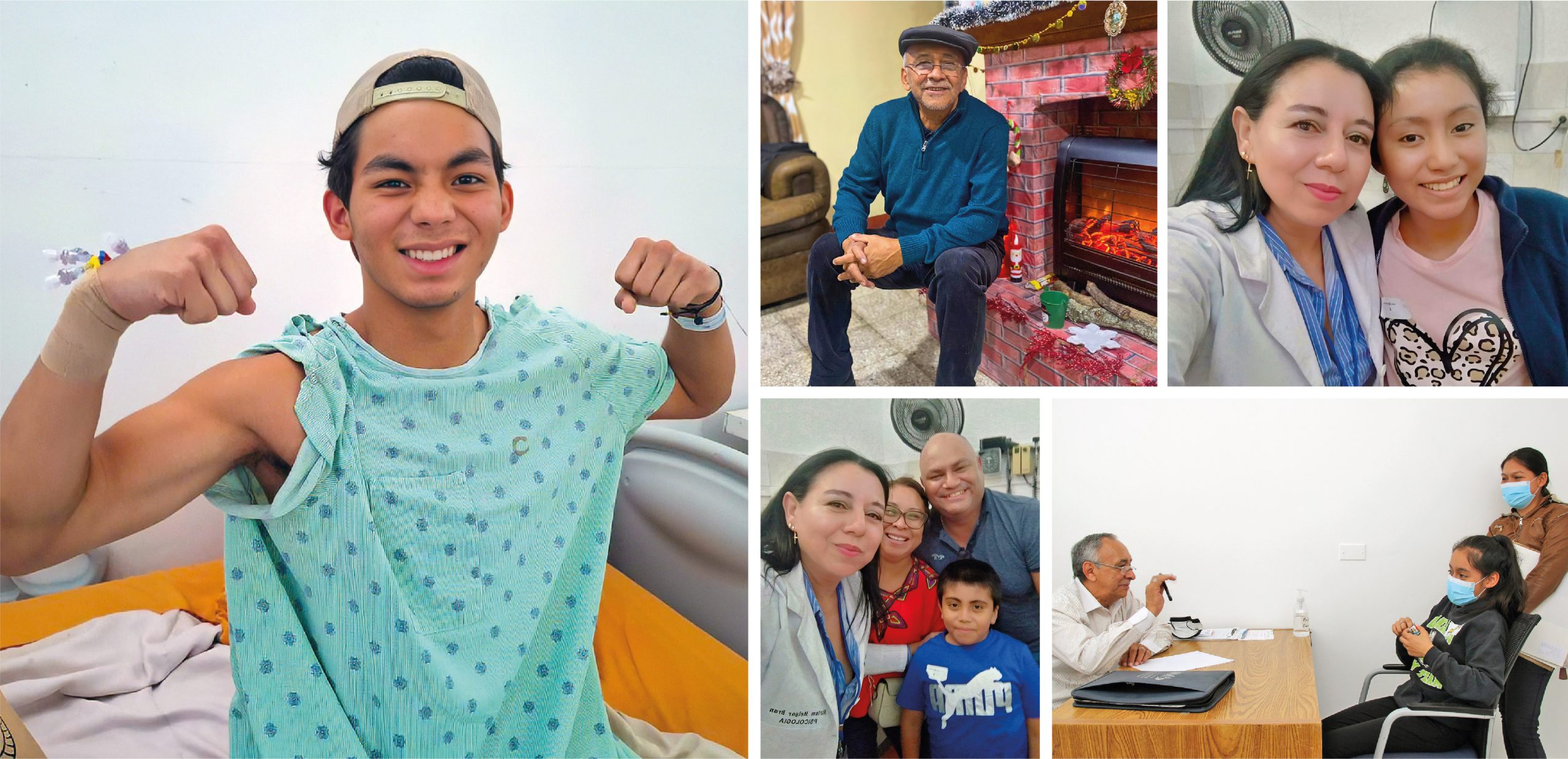
When a child leaves the operating room with a corrected condition, the world sees them as healed. But no one sees the fear they carried since the diagnosis, the shame they felt in the classroom, or the nights their family spent crying in silence. Since 2022, the Mental Health Program at World Pediatrics Guatemala has existed to heal precisely that: what cannot be seen but hurts just the same.

▌ The Origin: Surgery Without Soul
In 2022, Edgar Ochoa, Guatemalan Psychologist and World Pediatrics Mental Health program’s founder, whose memory continues to guide every session, understood something conventional medicine often overlooks: transforming a body without accompanying the mind leaves patients halfway through their journey. Children with corrected conditions who still could not look at themselves in the mirror. Teenagers with physical scars who felt more broken after surgery than before it.
That gap was the starting point. Today, the program is a consolidated reality that has accompanied 92 patients across multiple pediatric specialties: from scoliosis and neurosurgery to craniosynostosis and complex cases referred abroad for high-specialty procedures that could not be performed in Guatemala.
Since 2024, psychologist Mirian Melgar Bran, also from Guatemala, has led the program, bringing her expertise as a Family Psychologist and Logotherapist to deepen and expand its reach. Under her leadership, the program has continued to grow, refining its therapeutic protocols and strengthening its commitment to holistic patient care.
“While surgery transformed their lives physically, there was a pressing need to work internally on the fears, low self-esteem, and diverse emotional challenges that both children and their parents faced throughout the medical process.”
▌ Before Surgery: The Fear No One Names
The surgical waiting period is one of the most stressful experiences a family can endure. For a child, the idea of being operated on is terrifying. For parents, it means sleepless nights, difficult decisions, and emotional exhaustion that the traditional medical system does not account for. This reality is further compounded when the surgery must take place in another country: the family also faces the distance, the unfamiliar healthcare system, and the feeling of being completely alone.
The program’s pre-surgical intervention protocol responds directly to this reality: five psychotherapy sessions before the operation, tailored to the patient’s age and each family’s emotional profile. The central themes addressed during this phase include:
- Anticipatory anxiety and managing fear of the medical procedure.
- Low self-esteem stemming from physical condition and social stigma.
- Experiences of bullying, rejection, and discrimination, even within the family environment.
- In parents: emotional exhaustion, guilt, and constant fear throughout the medical process.
These sessions are not an optional complement; they are a clinical intervention that improves outcomes. Patients with lower pre-surgical anxiety show better anesthetic responses, reduced pain perception, and a more complete recovery.
▌ After Surgery: Reframing the Scar
Medical discharge is not the end of the process. In many cases, it is the beginning of the most delicate phase: learning to live with a transformed body. The five post-operative sessions are the therapeutic heart of the program.
The central work in this phase is the reframing of physical scars. In a society that treats bodily marks as flaws to be hidden, the program offers a different narrative: every scar is evidence of courage. It is the visible proof of something the patient survived and overcame. This carries special meaning for children with craniosynostosis or those who returned from surgeries abroad carrying not only a mark on their body, but the emotional weight of having lived through that process far from home.
“Patients are guided to understand that these marks are not a source of shame, but symbols of bravery, strength, and resilience allowing many of them to look at themselves again with love, confidence, and renewed hope.”
Through psychodynamic exercises, psychoeducation, and therapeutic strategies adapted to each age group, patients learn to recognize, express, and manage their emotions in a healthy way. Parents, in turn, process relief, which is also complex, and receive concrete tools to support their children’s emotional well-being at home.
▌ Growth in Numbers
Since its founding, the program has grown steadily over its first four years. The data reflects not only an increase in the number of cases served, but a growing trust among Guatemalan families in psychological support as an integral part of medical treatment regardless of specialty.
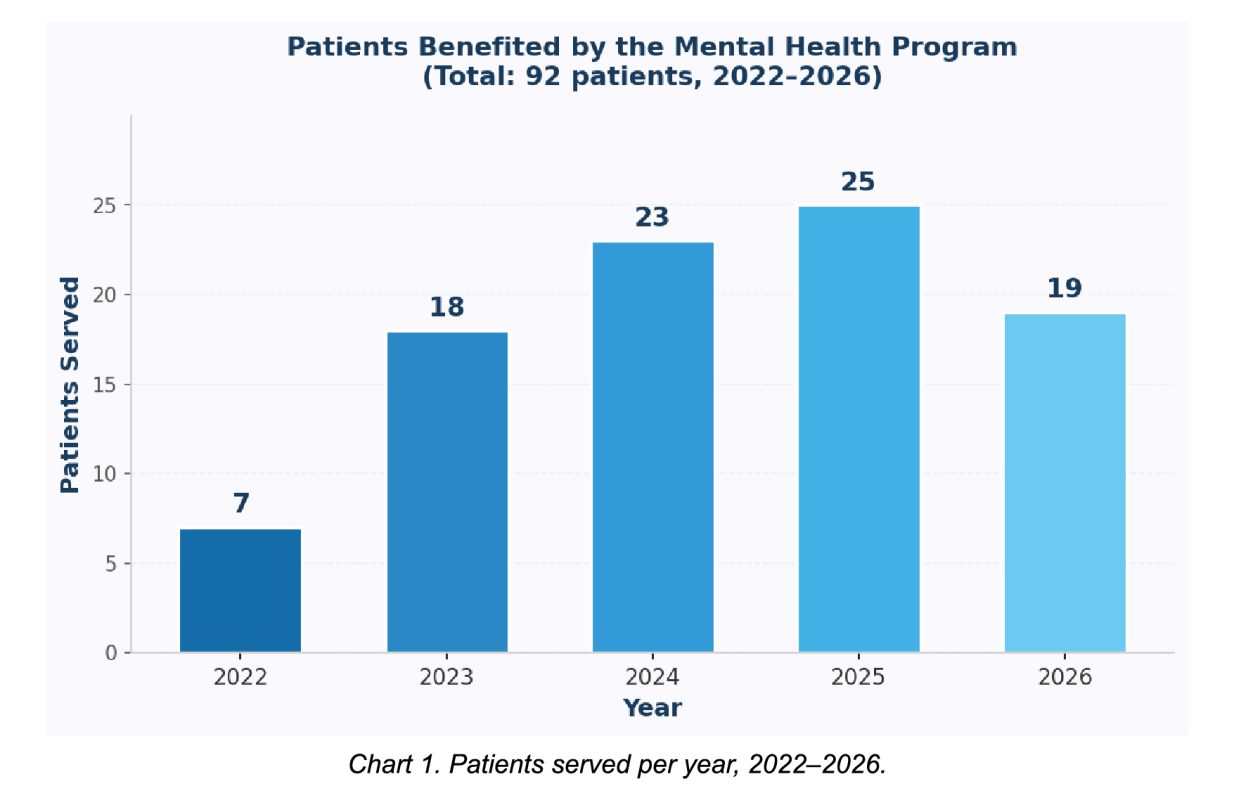
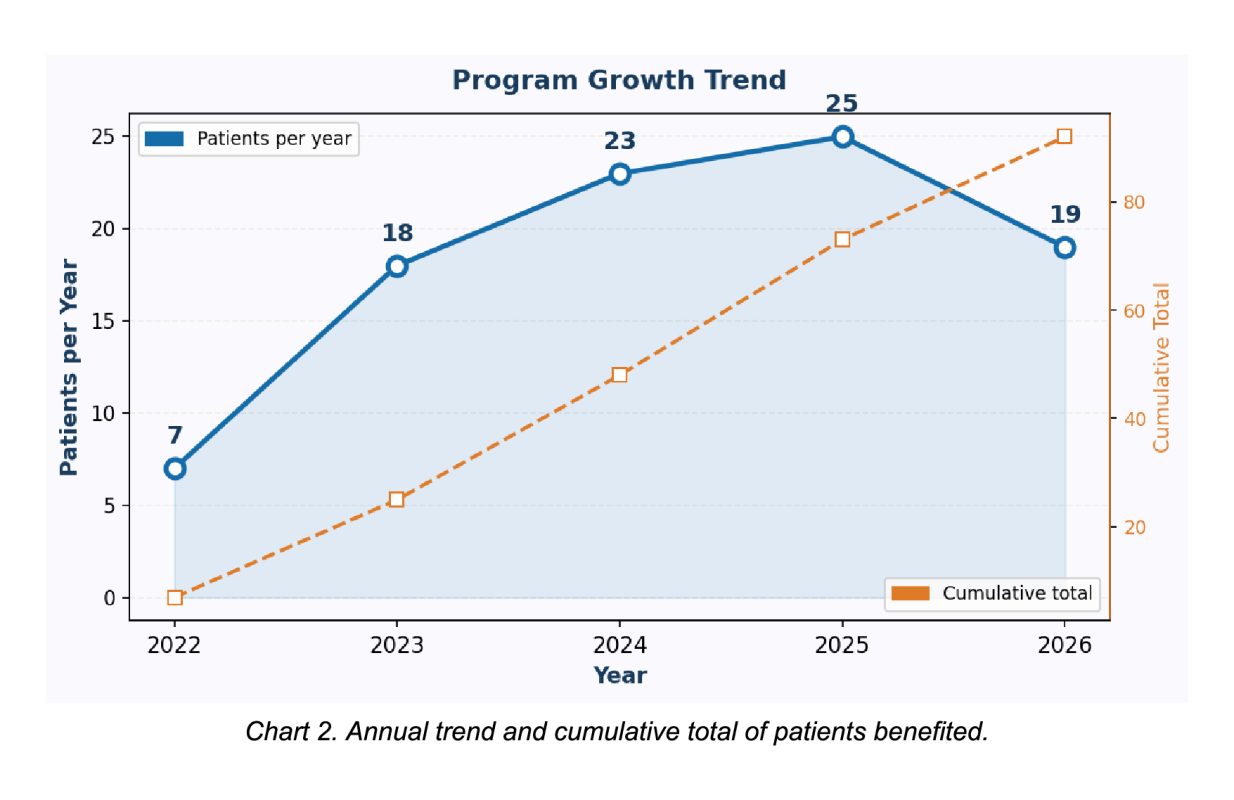
The slight decline recorded in 2026 reflects the natural cycle of surgical calendars and does not indicate a reduction in the program, which continues in full operation serving patients across multiple specialties.
▌ Beyond the Patient: The Impact on the Entire Family
One of the program’s most significant findings is that psychological intervention transforms the family as a system, not just the individual patient. Mothers who in most cases take on the role of primary caregivers arrive with critical levels of emotional exhaustion. Many carry silent guilt for not having detected the condition earlier, or for being unable to shield their child from pain.
For families whose children had to travel abroad for more complex procedures, the emotional impact runs even deeper: the uncertainty of an unfamiliar healthcare system, the financial stress of travel, and the loneliness of facing that process far from their support network are burdens the program also addresses.
Therapeutic work with parents includes emotional validation, psychoeducation about the medical process, and concrete communication tools for engaging with their children. The results are tangible: families who arrive fractured by stress leave with greater cohesion, improved dialogue, and shared hope.
“Testimonials of gratitude are constant: beneficiaries value having a space where, in addition to receiving medical care, they are heard and understood. For many, this program has meant recovering hope and discovering they are not alone on their path to recovery.”
▌ A Model of Care That Guatemala Needs
The Mental Health Program at World Pediatrics Guatemala demonstrates that high-quality pediatric medicine cannot be reduced to the surgical act alone. A well-executed procedure corrects structures; a well-designed psychological support program saves identities, families, and futures.
In a country where mental health resources are scarce and the stigma around psychological care persists, this program represents a replicable model: accessible, structured, evidence-based, and deeply human. Whether the child was treated for scoliosis, craniosynostosis, a neurosurgical condition, or underwent surgery abroad, the program ensures that no patient walks that path alone. Each of the 92 stories served to date is proof that a scar can become an emblem of strength and not a mark of shame.